

Before hiring a landscape maintenance contractor, an Oʻahu HOA board should get clear answers to five questions: What is included? Who coordinates the work? How are concerns handled? What documentation will we receive? What supports the contractor’s qualifications? Put the answers in writing so the board, property manager, and landscape team can work from the same expectations.
An attractive entrance matters. So does knowing who follows up when a sprinkler concern is reported or a task needs separate approval. This checklist helps your board move from a general conversation about landscaping to a practical maintenance plan for your community.
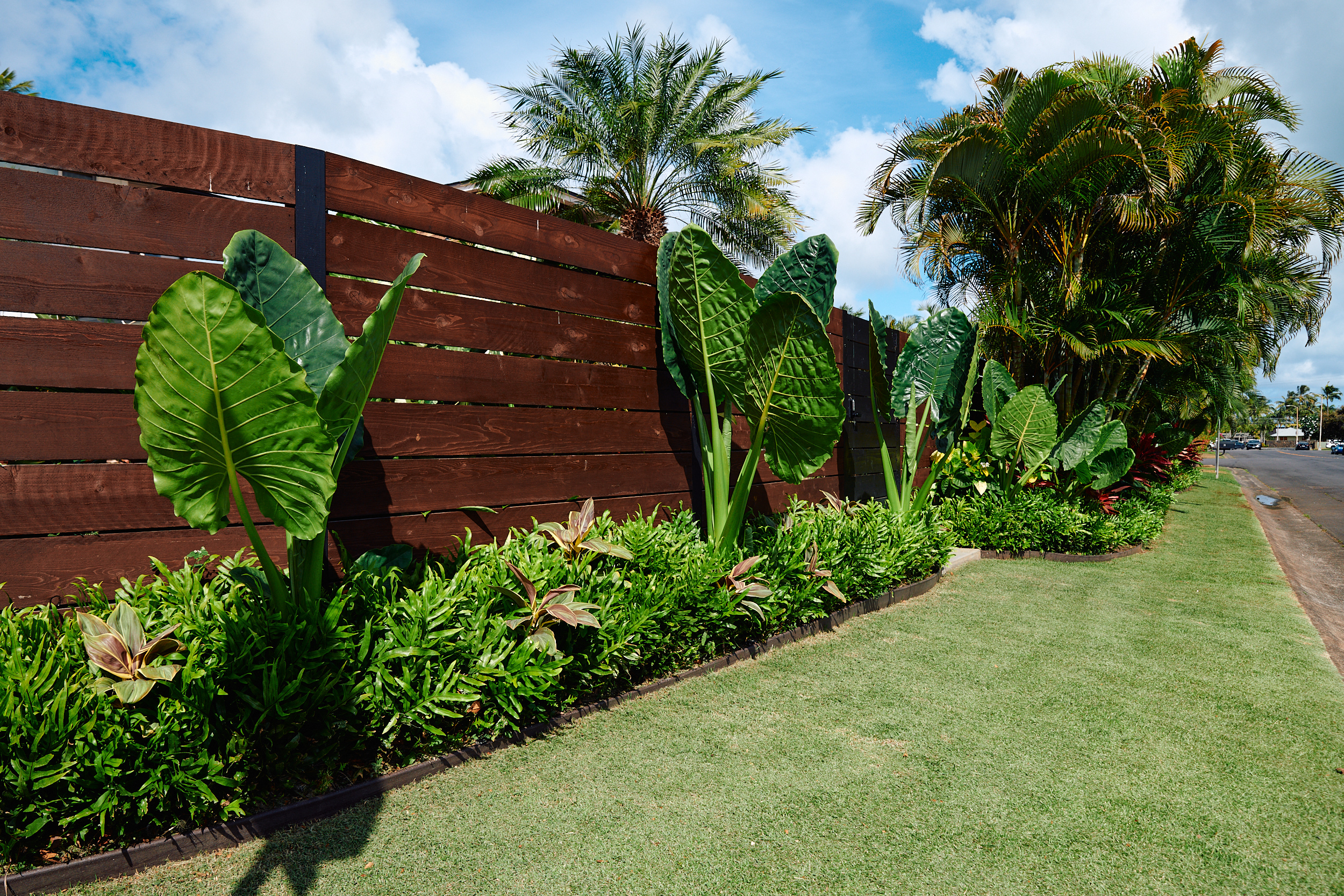
1. What will our landscape maintenance program include?
Start with a walkthrough and a marked site plan. Identify common areas, property boundaries, and any spaces maintained by residents or another vendor. Bring the current scope and a short list of recurring concerns rather than asking the contractor to guess what needs attention.
For each task, ask what is included, where it applies, how it is scheduled, and what requires separate authorization. Mowing, pruning, irrigation work, and landscape improvements should not be treated as interchangeable responsibilities.
Use a scope worksheet like this during the discussion. It is a planning template, not Koʻolau’s service schedule or a statement that every task is included.
| Area or task | Question for the contractor | Record in the proposed scope |
|---|---|---|
| Shared lawns and planting beds | Which areas and tasks will each visit cover? | Service boundaries, tasks, and proposed frequency |
| Trees and shrubs | What pruning is included, and what needs separate assessment? | Included work, exclusions, and approval process |
| Irrigation | What observations, adjustments, or repairs are included? | Maintenance responsibilities and repair authorization |
| Debris and cleanup | How will routine cleanup differ from additional cleanup? | Included work and the process for extra requests |
| Plant replacement or enhancements | Who recommends changes and approves them? | Decision-maker and written approval requirements |
A visit schedule alone is not a complete task schedule. Ask how the contractor will explain work that is deferred, outside scope, or awaiting a board decision. That distinction makes the maintenance program easier to evaluate later.
2. Who will coordinate the crew and communicate with us?
Give the contractor the information needed to work around your community: access arrangements, parking restrictions, delivery windows, resident activities, and areas that need to remain accessible. For a gated property, clarify who maintains the access instructions and how changes reach the crew.
Ask who supervises the work and who your property manager should contact. Then agree on one primary board or management representative for service decisions. Residents can still report concerns, but conflicting instructions from several people can leave everyone uncertain about what was authorized.
Bring these questions to the walkthrough:
- Who is our regular contact, and who covers when that person is unavailable?
- How will property-specific instructions be passed to a different crew member?
- How should residents submit a concern to management?
- Which decisions can the property manager make, and which return to the board?
Discuss your actual site conditions. A busy entrance in Honolulu and shared grounds in a Kailua community may call for different access arrangements. The useful answer is how the contractor will address your property, rather than a general promise of good communication.
3. What happens when a problem falls outside the maintenance scope?
Agree on how a concern moves from observation to decision. Ask how routine questions are distinguished from conditions needing prompt attention, and discuss available response arrangements without assuming emergency service or a particular turnaround is included.
Consider this hypothetical example: someone notices water collecting near a common-area planting bed. The property manager records the location, observation date, and a brief description. A photo can help identify the area without showing residents or private information. The observation is not yet a diagnosis or authorization to make a repair.
The next conversation should establish whether investigation is included, whether separate work is recommended, and who can approve it. A simple issue log can use this sequence:
Observation → person responsible for the next action → authorization needed → next check-in → documented outcome.
Keep an item open until the next action and outcome are understood. Forwarding an email does not, by itself, show that a concern has been resolved. Ask the contractor to explain how its own process would handle this example; the sequence above is a discussion tool, not a claim about Koʻolau’s current reporting system.
4. What will service reports and photos actually show?
Request a sample report with customer details removed. Your board should be able to understand what happened without reconstructing the visit from a folder of unlabeled photographs.
Ask how the report identifies the service date, areas attended, exceptions, recommended follow-up, and items awaiting approval. Where photos are used, discuss how they show location and context while protecting residents’ privacy.
Also ask how work that is difficult to photograph is documented. A close-up image may show a condition in one bed; it does not establish that every task across the property was completed. An effective review discussion connects the report back to the agreed scope and identifies the next action for any exception.
5. How can we verify the contractor’s qualifications?
Ask for current supporting documents relevant to the proposed work. Review the names, dates, and scope of any credentials claimed, along with the insurance information provided. A badge in a proposal is a starting point for verification, not a substitute for it.
For contractor-license checks, use Hawaiʻi’s Department of Commerce and Consumer Affairs official hiring and verification resources. DCCA directs consumers to obtain the contractor’s name and license number and check its status. Discuss which qualifications are relevant to the work proposed; routine maintenance and a separate installation project should not be assumed to have identical requirements.
Request references from comparable communities, with permission to contact them. Useful questions cover communication, handling of exceptions, and whether responsibilities were clear. If reviewing project photos, ask what work the contractor actually performed. Do not assume every feature pictured was part of its scope.
What should the board have before making a decision?
Bring five items to the next discussion: a marked service-area plan, a written task scope, the communication and escalation process, a sample report, and current supporting documents. Record unanswered questions and assign someone to obtain each answer.
This checklist focuses on interviewing a contractor. A formal request for proposals and a detailed price comparison are separate steps. Establishing the responsibilities first gives those later discussions a clearer foundation.
Does a weekly visit mean every task happens weekly?
No. Ask for the proposed frequency of individual tasks and how exceptions will be recorded. The visit schedule should be read alongside the written maintenance scope.
Should every reported issue become an extra work order?
First clarify whether assessment or correction is already included. If separate work is recommended, confirm who can authorize it and how that decision will be documented before proceeding.
Talk with Koʻolau about your HOA’s landscape needs
Koʻolau Landscaping is an Oʻahu company founded by Kailua local Asher Eisenpress. Our company background describes our work in landscape maintenance, design, and irrigation, and we provide HOA landscaping services across Oʻahu.
Bring your community’s existing scope, site plan, and top concerns to the conversation. Contact Koʻolau Landscaping to discuss the property and the maintenance responsibilities you want clarified. We can start with your needs and discuss a proposed scope before service expectations are finalized.